

The city's assets
A city with many attractions
Located at the confluence of the Thames River, between Lake Erie and Lake Huron, the city of London is approximately 125 miles from Toronto and Detroit (United States), and 143 miles from Buffalo (New York State).
London combines economic prosperity and quality of life, with:
- A lush natural heritage, surrounded by forests and farmland.
- A rich history, marked in particular by the presence of the Neutral Nation on this territory.
- A major financial center in Ontario.
- A vibrant cultural life, driven by art, music, theater, and numerous festivals.
- A strong sporting tradition, with modern facilities and several well-known professional teams (hockey, baseball, basketball).
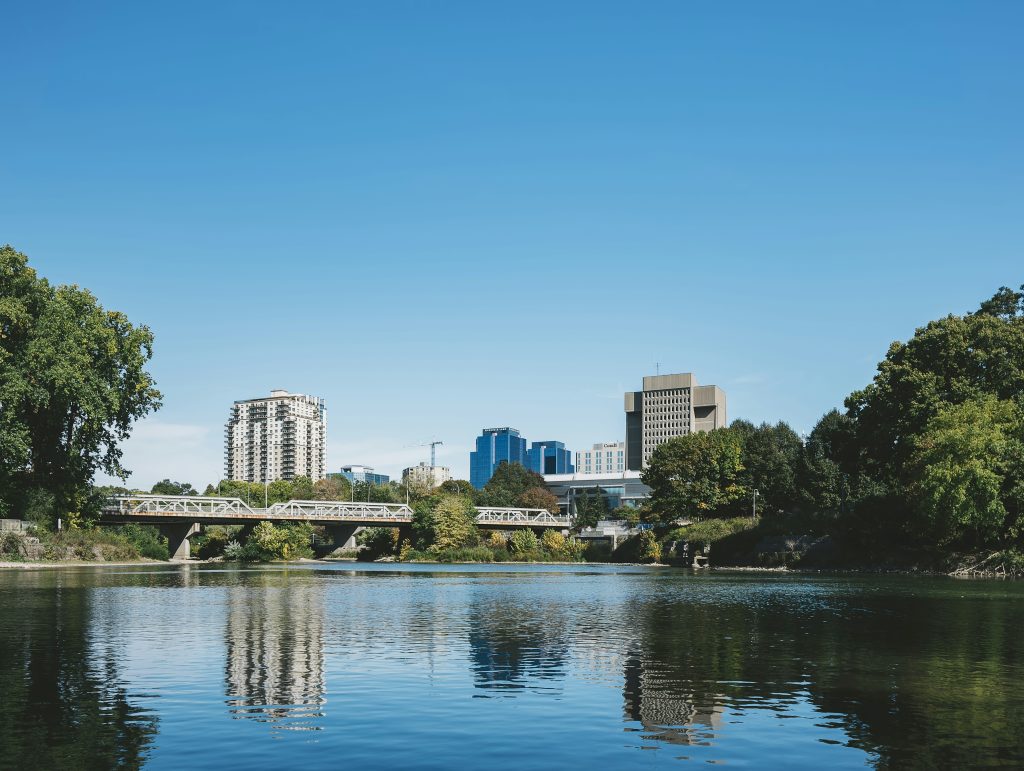

London is therefore a safe and dynamic place to live, offering employment opportunities and easy access to education, culture, and everyday leisure activities.
The city also offers excellent opportunities for post-secondary education, with six universities and colleges—including Fanshawe College and Western University.
London's economy is highly diversified and, in addition to the education sector, includes other important industries that employ a large portion of the workforce. These industries include: advanced manufacturing, healthcare, and food processing.
The My London app allows you to learn even more about local resources for various topics: arts and culture, entrepreneurship, employment, parks, and recreation. The app is equipped with an automatic translation tool for different languages, including French. https://www.mylondonapp.ca/

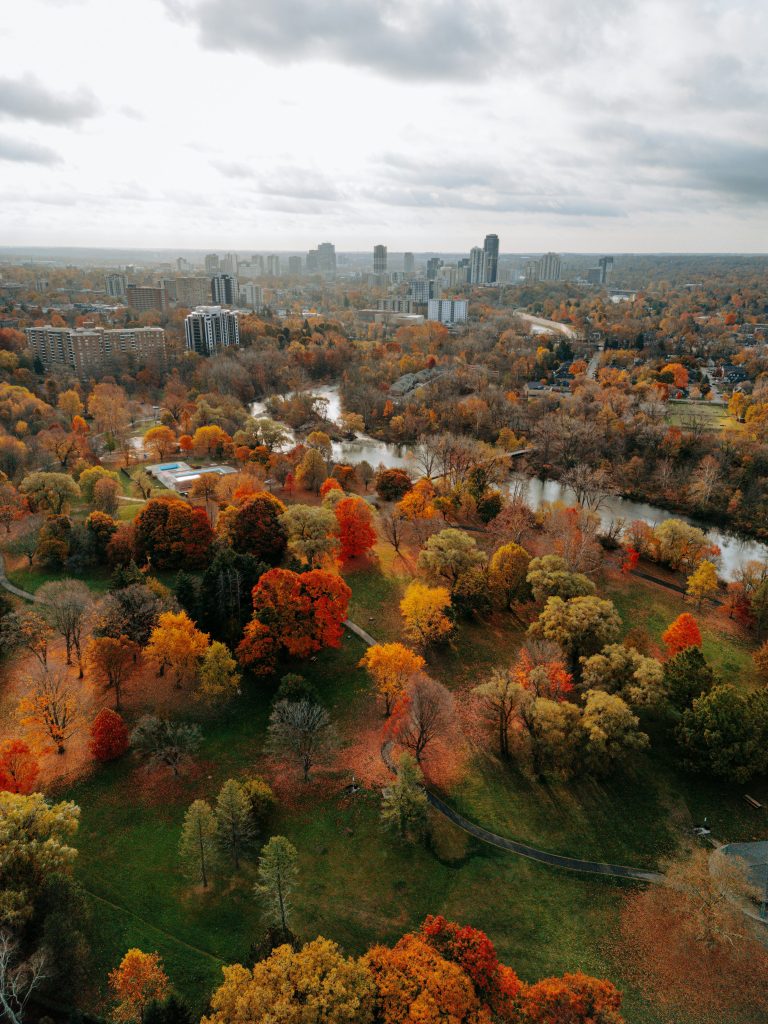
A climate typical of southwestern Ontario
London has a humid continental climate, characterized by warm, humid summers, cold winters with heavy snowfall, and relatively short transitional seasons.
- Summer (July): average temperature ~ 73.6°F, with more than ten days exceeding 86°F per year.
- Winter: cold but with occasional mild spells, with average snowfall of around 194 cm/year.
- Precipitation: approximately 1,011 mm per year, evenly distributed throughout the year.
- Seasonal variability: short springs and autumns; summers sometimes stormy with the risk of severe weather events such as tornadoes.
This climate gives the region a wonderful seasonal diversity: summer heat, authentic winter atmosphere, and rapid transitions in spring and fall.
Good to know
The Francophone Immigration Network of Southwestern Ontario, which is spearheading the CFA London project, launched the GuideMoi mobile app in 2021. The app provides general information for those who wish to settle in Ontario.

London in figures
With a population of over 543,551 inhabitants (city and surrounding area: St. Thomas, Thames Centre, Middlesex Centre, etc.), London is one of the largest municipalities in southwestern central Ontario. It offers an exceptional living environment that is both urban and natural.
The community is diverse, with more than 170 languages spoken, including Arabic, Spanish, Mandarin, and Portuguese.
More than 20% of the population are immigrants and belong to visible minorities.
Between 2016 and 2021, the French-speaking population of the London Economic Region (which includes Elgin County, the City of St. Thomas, Oxford County, Middlesex County, and the City of London) grew by 15.8% to reach 11,190 people.
+543 551
residents
+170
languages spoken
20%
of the population with an immigrant background
+ 11 190
French-speaking population
Good to know
The London area has been inhabited for over 10,000 years by Indigenous peoples such as the Anishinaabeg, Haudenosaunee, and Lenni Lenape. Governor Simcoe chose the confluence of the Thames River in 1793 as an administrative center, and the city was officially founded in 1826. London earned its nickname «The Forest City» because at the time it was just a small village surrounded by a huge forest.