

The Communauté francophone accueillante (CFA) London has produced two infographics highlighting some of the key findings of the Local labor market plan 2026-2027 and the Barriers to integrating immigrants into the job market published by the Elgin, Middlesex and Oxford Workforce Planning and Development Board (EMO WPDB).
These reports paint a picture of a region undergoing demographic and economic growth, while highlighting the persistent obstacles many immigrants face on their path to employment.
A growing region
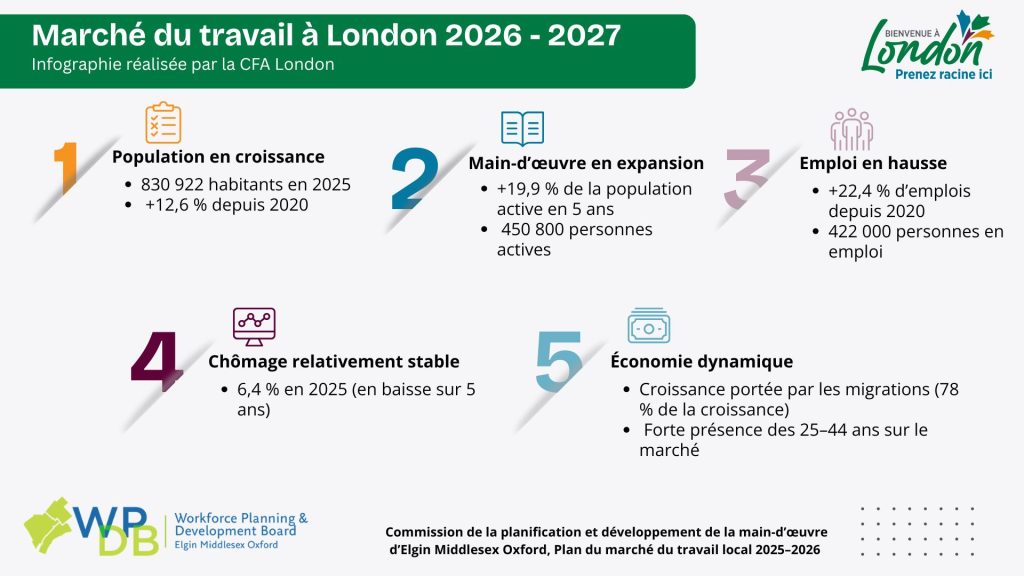
In 2025, the London Economic Region (LER) will have more than 830,000 inhabitants, an increase of 12.6 % since 2020, above the Ontario average.
Population growth remains positive, but is slowing down. After several years of growth of around 3 % per year between 2021 and 2024, it settles at 1.4 % between 2024 and 2025. According to the report, this slowdown is due in particular to a decline in the number of migrants and immigrants arriving in the London Economic Region and Canada in general. The report also points to growth in the region's working population. People aged between 25 and 54 account for almost half of the regional workforce, and are the main group active in the labor market.
The region's workforce grew by 13.3 % in five years, while the number of people in employment continues to rise.
A dynamic economy
The region's economy continues to evolve, with significant labor needs in several sectors. The local labor market report highlights employment growth and the recruitment challenges faced by employers.
The London area remains a major economic hub in southwestern Ontario, supported by the health, manufacturing, service, technology and agri-food sectors.
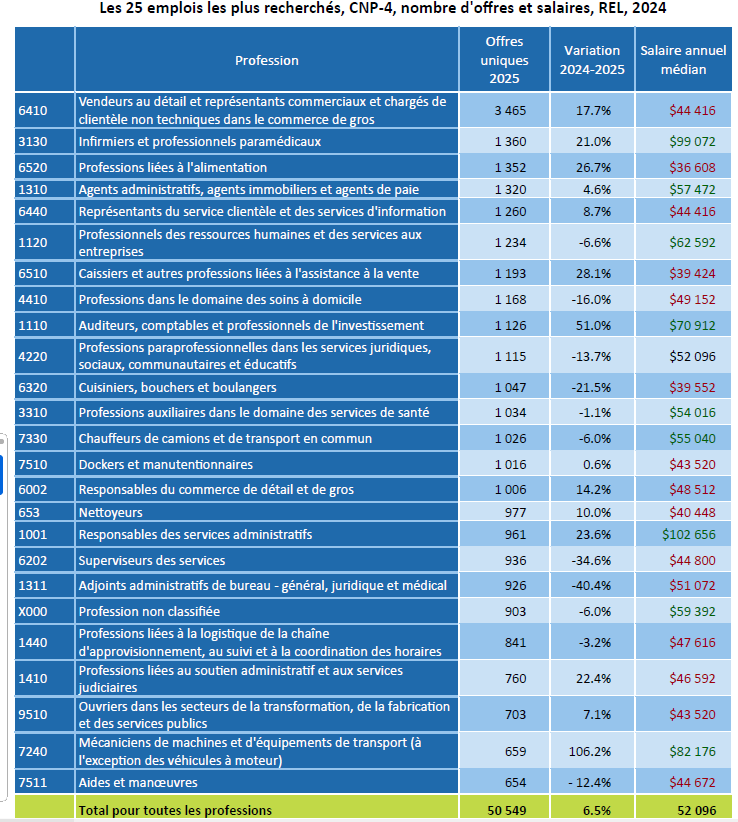
The Local Labour Market Plan also highlights the 25 most sought-after jobs in 2024
Persistent obstacles for immigrants
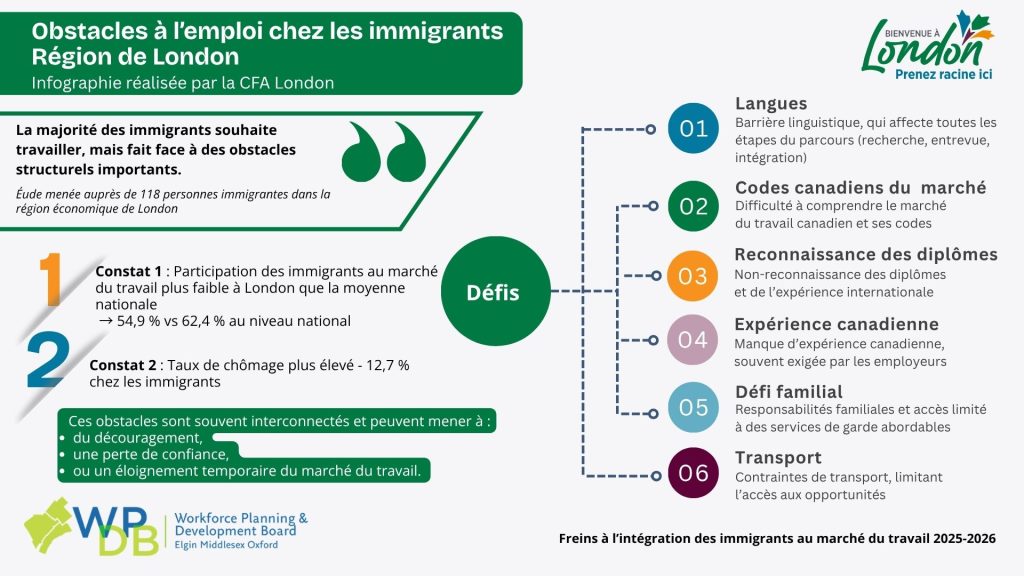
Despite this economic growth, the report on barriers to immigrant integration points out that many immigrants still face significant obstacles to their participation in the job market.
The study, conducted among 118 immigrants in the London area, shows that immigrants' participation in the labor market remains lower than the national average. The unemployment rate among immigrants is also 12.7 %.
Among the main challenges identified :
- language barriers ;
- difficulty in understanding the codes of the Canadian job market ;
- recognition of diplomas and international experience ;
- lack of Canadian experience; ;
- family responsibilities and limited access to childcare ;
- transportation issues.
The report also points out that these barriers are often interconnected and can lead to discouragement, loss of confidence or temporary disengagement from the job market.
Ways to strengthen integration
Both reports emphasize the importance of concerted approaches between employers, community organizations, employment services and institutions to foster better economic integration of new arrivals.
Improved access to language services, support for skills recognition, mentoring, connections with employers and services adapted to family and cultural realities are among the avenues put forward for action.
Take a look at our infographics to discover some key figures on the job market and the challenges of professional integration in the London area.
If you haven't already done so, we invite you to check out our newsletter from the Welcoming Francophone Communities of Hamilton and London. Issue no. 6, out in early May 2026, is a special edition dedicated to entrepreneurship and employability: Hamilton and London CFA Newsletter Issue 6